What we can all learn for future pandemics?
1. Avoid a "one size fits all" approach: measures must be tailored to specific target groups.
2. More effective communication to allay concerns and anxiety around vaccination is required.
3. Mental stress was underestimated.
1. Is it fair to treat everyone the same?

Photo: HCHE
Who felt most affected by corona measures?
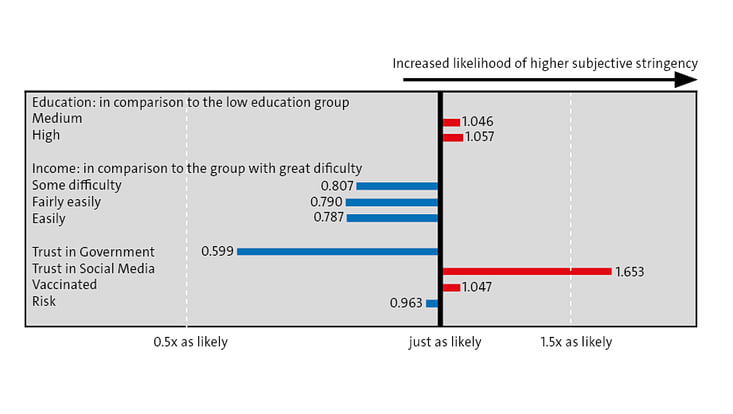
Young adults in the 18–24 and 25–34 age groups, families with children, and people who trusted in social media found the COVID-19 measures particularly difficult to cope with.
Adults in older age groups and people who had confidence in the government’s measures found the situation significantly less difficult.

Photo: HCHE
Subjective perception of the Corona measures
The smaller the number (blue lines), the more likely it is that people feel the lockdown isn‘t that strict than the comparison group.
The bigger the number (red lines), the more likely it is that people feel the lockdown is stricter than the comparison group.

Photo: HCHE
Deep dive
"Public Perceptions Of COVID-19 Lockdown Policies In Europe: Socioeconomic Status And Trust Were Factors"; L. Falk, S. Neumann-Böhme, I. Sabat, J. Schreyögg, Health Affairs 2023
2. Vaccination brought freedom and protection from severe cases— but not everyone was willing to get vaccinated against COVID-19.

Photo: HCHE
Dynamic development
From 2020 to 2022, the HCHE, together with researchers from other European universities, investigated the concerns, attitudes, and willingness to be vaccinated among the population. As part of the "European COVID Survey (ECOS)" project, more than 7,000 people in seven European countries were surveyed every two months.

Photo: HCHE
Main Reasons for adults not being vaccinated
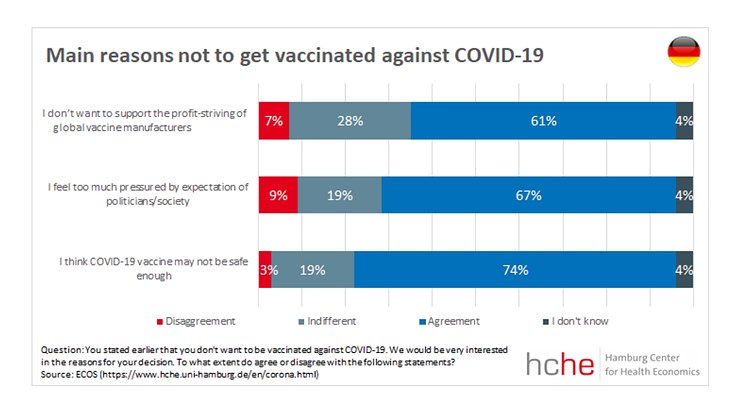
People decided against vaccination because they had doubts about the vaccine's safety. Furthermore, many respondents felt pressured by politicians and society. Another common reason was a reluctance to support the profits of global vaccine manufacturers.

Photo: HCHE
Do parents think different for their children?
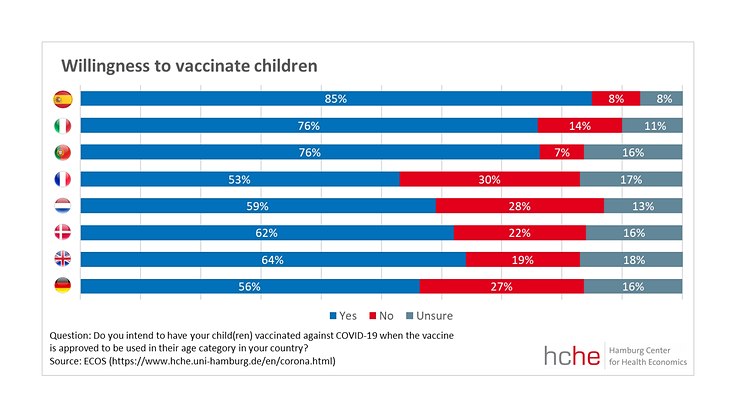
In Germany only 56% of parents were willing to have their children vaccinated if the vaccine is approved for the child‘s age.
3. Loneliness, Restrictions, Fears — the longterm mental health effects of the pandemic

Photo: HCHE
Psychological effects on the population
As a consequence of the pandemic, many people reported difficulties with social participation and suffered from psychological stress. 43% reported fewer contacts and friendships, and 35% reported mental health problems. This was particularly pronounced, at around 50%, among 18- to 24-year-olds.

Photo: hche
Informal caregivers
– were primarily responsible for care and protection of their older relatives and friends
– suffered worse mental health than non-carers during the pandemic
– had more social support than non-carers during the pandemic

Photo: HCHE
Deep dive
"Mental health, social integration and support of informal caregivers during the second wave of the COVID-19 pandemic: A population-based representative study from Germany"; L. Zwar, H.-H. König, A. Hajek, Archives of Gerontology and Geriatrics, 2023
Current Research on Long covid

Photo: Reinhard Balzer
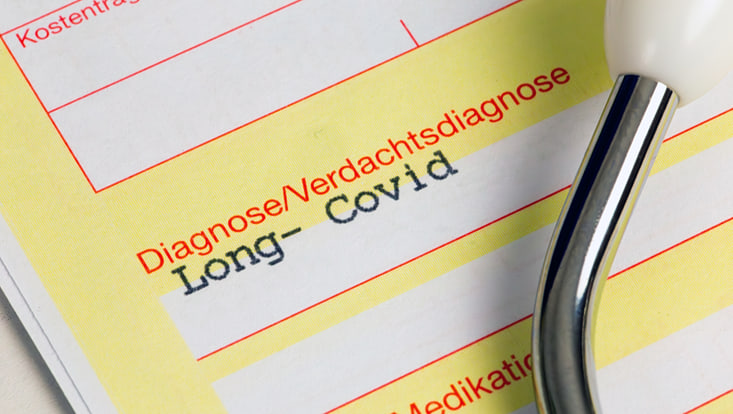
Almost anyone can develop Long Covid
... even if they initially had mild symptoms.
What patients want:
– a multi-professional point of contact
– the integration of the disease into medical education

Photo: adobestock
DiaMECO
DiaMECO (Diagnostic Delay in ME/CFS and Post-COVID: Causes, Consequences, and Opportunities for Improvement) examines factors influencing the time between symptom onset and diagnosis in ME/CFS and Post-COVID, as well as the impact on the quality of care. The research project will run until 2027.

Photo: HCHE
StiMECO
The StiMECO research project focuses on the stigmatization of ME/CFS and post-COVID and its impact on the quality and costs of healthcare. The research aims to strengthen needs-based care related to the long-term effects of COVID-19.