Corona-Forschung am HCHE
Gesundheitsökonomisch stellen sich in der aktuellen Krisensituation viele Fragen, zum Beispiel wie die Bevölkerung mit der Bedrohung durch das Corona-Virus umgeht und inwieweit sie politischen Entscheidungen wie dem Kontaktverbot folgt.
Daher untersucht das HCHE seit April 2020 gemeinsam mit Forscher:innen von drei weiteren europäischen Universitäten die Sorgen und Einstellungen der Menschen in der Corona-Pandemie sowie die Impfbereitschaft. Im Rahmen des Projekts "European COvid Survey (ECOS)" werden alle zwei Monate mehr als 7.000 Menschen in 7 europäischen Ländern befragt. Die Studie ist repräsentativ.
Ergebnisse der 11. Befragungswelle vom 18. November - 07. Dezember 2022
Mehrheit gegen Lockerungen der Corona-Regeln
Ob Maskenpflicht in Bus und Bahn, Isolationsvorschriften für Infizierte, Schutzmaßnahmen für Kliniken oder eine Impfpflicht für medizinisches Personal: Die Mehrheit der Menschen in Deutschland findet diese Regeln laut einer Befragung im Rahmen der European COvid Survey (ECOS) richtig. Mehr als jeder Dritte rechnet zudem mit einer weiteren Pandemie innerhalb der nächsten fünf Jahre und nur 26 Prozent meinen, dass Deutschland darauf gut oder sehr gut vorbereitet ist.
Weiterhin zeigen die repräsentativen Umfragen vom Hamburg Center for Health Economics (HCHE) der Universität Hamburg, die in Deutschland und sieben weiteren europäischen Ländern durchgeführt wurde, folgende Ergebnisse:
63 Prozent der Befragten in Deutschland wünschen sich eine Maskenpflicht in öffentlichen Verkehrsmitteln. Nur 17 Prozent sprechen sich dagegen aus. Für die Beibehaltung der Isolationspflicht bei einer Infektion votierten 68 Prozent, lediglich 12 Prozent sind für eine Aufhebung. Auch die Schutzmaßnahmen für Kliniken finden große Zustimmung: So unterstützen 70 Prozent die Maskenpflicht für Patientinnen und Patienten sowie Besucherinnen und Besucher und immerhin noch 58 Prozent eine Impfpflicht für medizinisches Personal. Grundsätzlich zeigt sich, dass die Zustimmung zu den Maßnahmen im Westen Deutschlands jeweils am höchsten, im Osten am geringsten ist.
Lesen Sie hier weiter.
Publikationen
Aktuell veröffentlichte Publikationen
C Brinkmann, I Sabat, S Neumann-Böhme, ... & J Schreyögg: Jumping the Queue: Willingness to Pay for Faster Access to COVID-19 Vaccines in Seven European Countries. PharmacoEconomics. Pharmaco Economics
S Himmler, J van Exel, W Brouwer, S Neumann-Böhme, … & A Torbica: Braving the waves: exploring capability well-being patterns in seven European countries during the COVID-19 pandemic. The European Journal of Health Economics
I Sabat, S Neumann-Böhme, PLOMP Barros, J van Exel, W Brouwer, ... & J Schreyögg: Vaccine hesitancy comes in waves: Longitudinal evidence on willingness to vaccinate against COVID-19 from seven European countries. Vaccine
HH König, S Neumann-Böhme, I Sabat, J Schreyögg, A Torbica, ... & A Hajek: Health-related quality of life in seven European countries throughout the course of the COVID-19 pandemic: evidence from the European COvid Survey (ECOS). Quality of Life Research
A Hajek, I Sabat, S Neumann-Böhme, J Schreyögg, PP Barros, ... & HH König: Prevalence and determinants of probable depression and anxiety during the COVID-19 pandemic in seven countries: Longitudinal evidence from the European COvid Survey (ECOS). Journal of affective disorders
A Hajek, S Neumann-Böhme, I Sabat, A Torbica, J Schreyögg, PP Barros, ... & HH König: Depression and anxiety in later COVID-19 waves across Europe: New evidence from the European COvid Survey (ECOS). Psychiatry Research
JJ Enzing, FCW van Krugten, I Sabat, S Neumann-Böhme, B Boer, ...& W Brouwer: Psychometric evaluation of the Mental Health Quality of Life (MHQoL) instrument in seven European countries. Health and Quality of Life Outcomes
S Neumann-Böhme, I Sabat, AE Attema: Altruism and the link to pro-social pandemic behavior. Frontiers in Health Services
T Chandler, S Neumann‐Böhme, I Sabat, PP Barros, W Brouwer, ... & T Stargardt: Blood donation in times of crisis: early insight into the impact of COVID‐19 on blood donors and their motivation to donate across European countries. Vox Sanguinis
NE Varghese, I Sabat, S Neumann-Böhme, J Schreyögg, T Stargardt, ... & W Brouwer: Risk communication during COVID-19: A descriptive study on familiarity with, adherence to and trust in the WHO preventive measures. PloS one
S Neumann-Böhme, I Sabat: Now, we have it. Will we use it? New results from ECOS on the willingness to be vaccinated against COVID-19. Hamburg Center for Health Economics
S Neumann-Böhme, SA Lipman, W Brouwer, AE Attema: Trust me; I know what I am doing investigating the effect of choice list elicitation and domain-relevant training on preference reversals in decision making for others. The European Journal of Health Economics
S Neumann‐Böhme, AE Attema, W Brouwer, J van Exel: Life satisfaction: The role of domain‐specific reference points. Health Economics
S Neumann-Böhme, NE Varghese, I Sabat, PP Barros, W Brouwer, ...& T Stargardt: Once we have it, will we use it? A European survey on willingness to be vaccinated against COVID-19. The European Journal of Health Economics
I Sabat, S Neumann-Böhme, NE Varghese, PP Barros, W Brouwer, ... & T Stargardt: United but divided: Policy responses and people’s perceptions in the EU during the COVID-19 outbreak. Health Policy
I Sabat, N Elsem Varghese, S Neuman-Böhme, PP Barros, W Brouwer, J van Exel, J Schreyögg, T Stargardt: Countering COVID-19: A European survey on acceptability of and commitment to preventive measures. European Journal of Public Health
NE Varghese, I Sabat, S Neumann-Böhme, J Schreyögg, T Stargardt,…& W Brouwer: Europeans know and act on WHO recommendations during COVID-19. VoxEU. Org
NE Varghese, I Sabat, S Neumann-Böhme, J Schreyögg, T Stargardt, ... & W Brouwer: Risk Communication during COVID-19: Familiarity with, Adherence to and Trust in the WHO Preventive Measures. Covid Economics: Vetted and Real-Time Papers
I Sabat, NE Varghese, S Neuman-Böhme, PP Barros, W Brouwer, ...& T Stargardt: Battling the infodemics: health communication effectiveness during COVID-19. European Journal of Public Health
Bildergalerie Ergebnisse der elften Welle
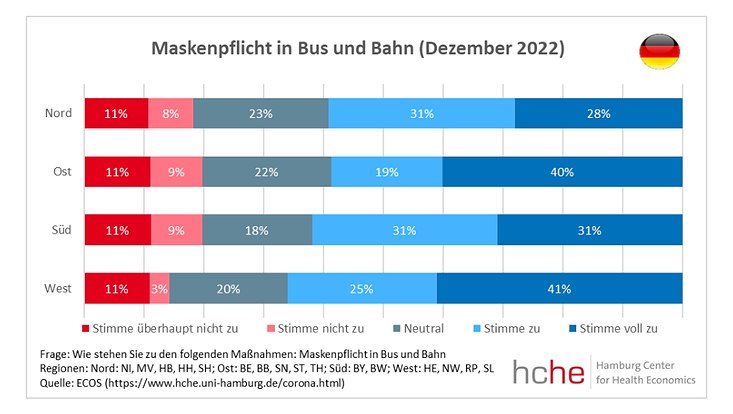
Foto: HCHE
Maskenpflicht in Bus und Bahn
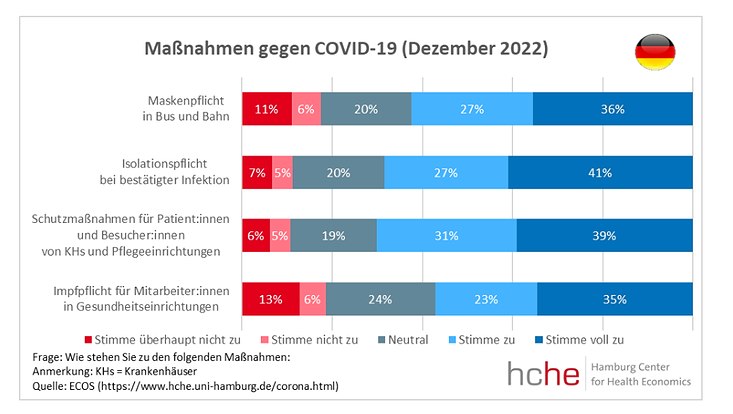
Foto: HCHE
Maßnahmen gegen COVID-19
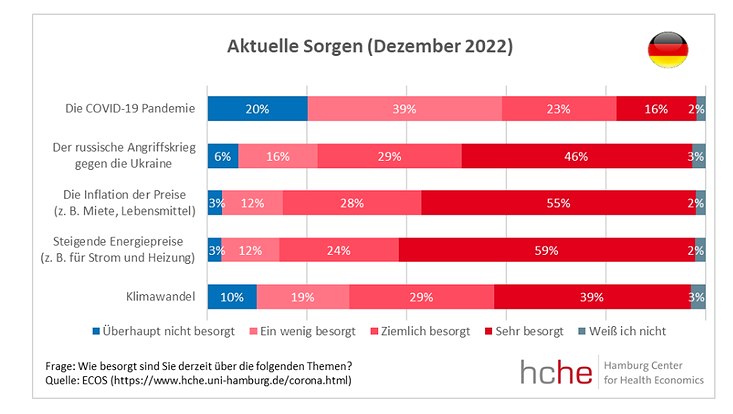
Foto: HCHE
Aktuelle Sorgen
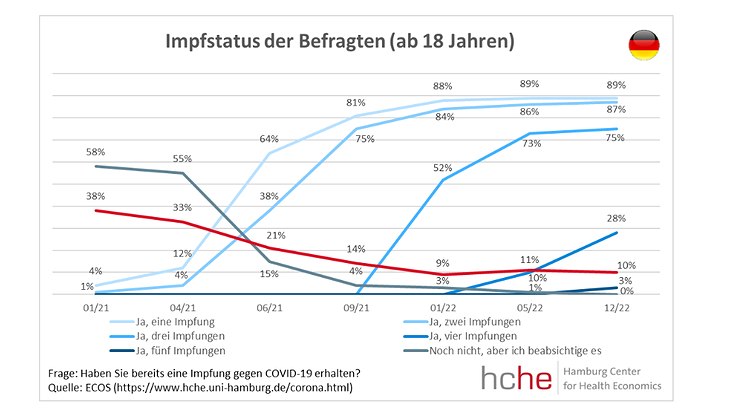
Foto: HCHE
Impfstatus der Befragten (ab 18 Jahren)
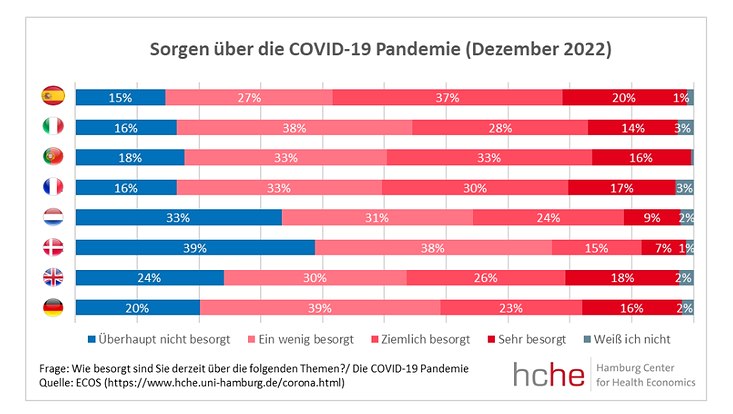
Foto: HCHE
Sorgen über die COVID-19 Pandemie
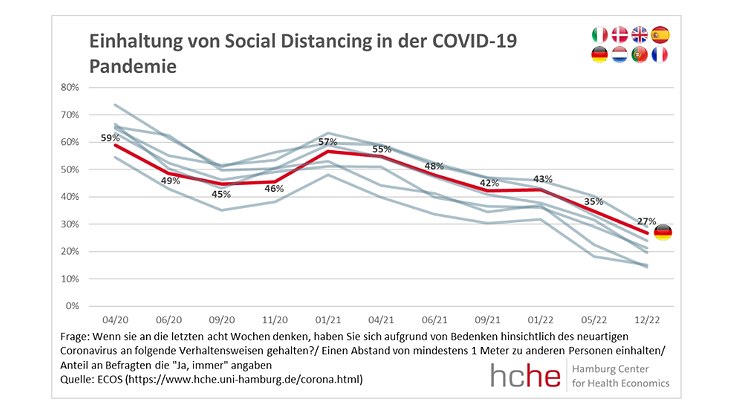
Foto: HCHE
Einhaltung von Social Distancing in der COVID-19 Pandemie
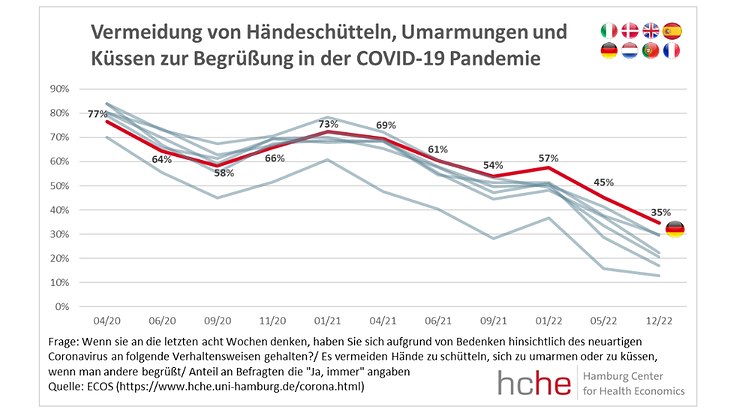
Foto: HCHE
Vermeidung von Händeschütteln, Umarmungen und Küssen zur Begrüßung in der COVID-19 Pandemie
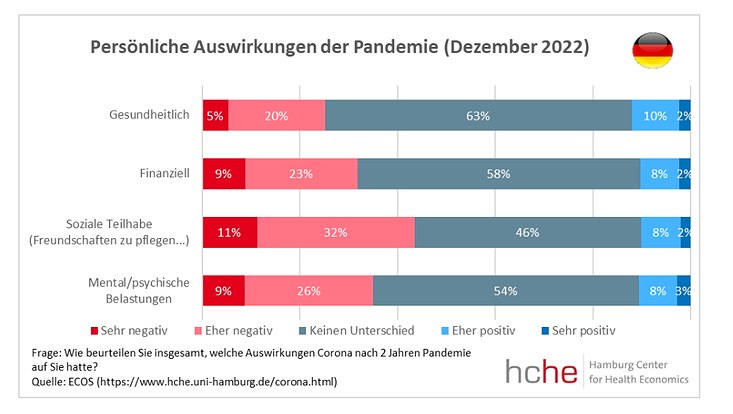
Foto: HCHE
Persönliche Auswirkungen der Pandemie
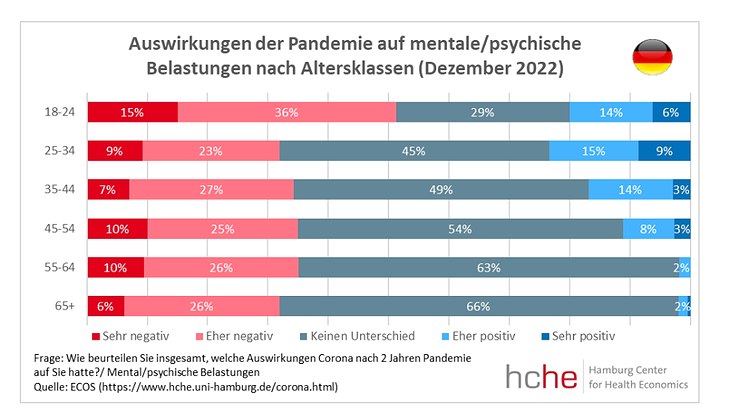
Foto: HCHE
Auswirkungen der Pandemie auf mentale/psychische Belastungen nach Altersklassen
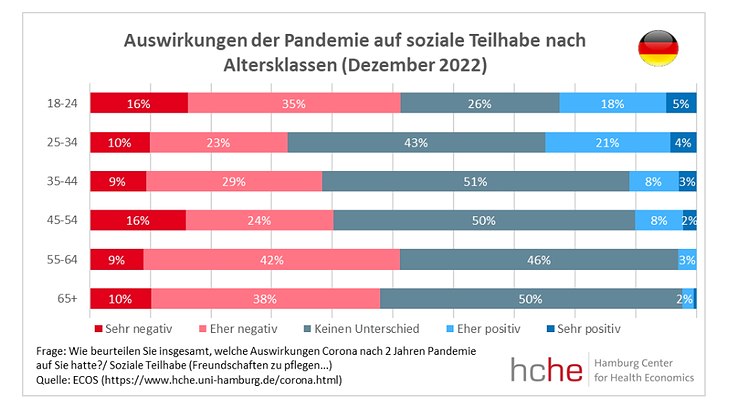
Foto: HCHE
Auswirkungen der Pandemie auf soziale Teilhabe nach Altersklassen
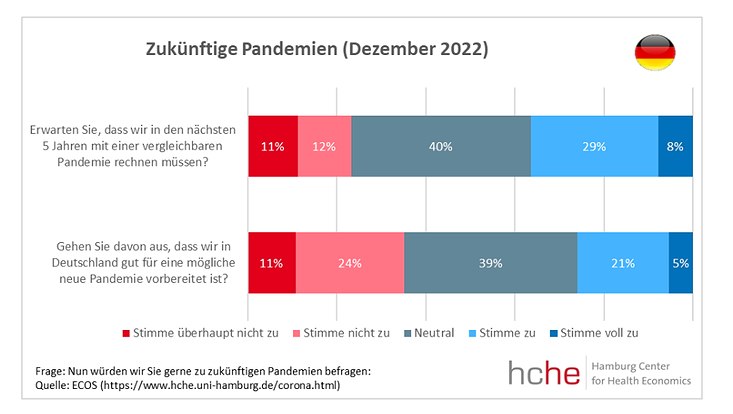
Foto: HCHE
Zukünftige Pandemien
Bildergalerie Ergebnisse der zehnten Welle

Foto: HCHE
Impfbereitschaft in Deutschland (ab 18 Jahren)
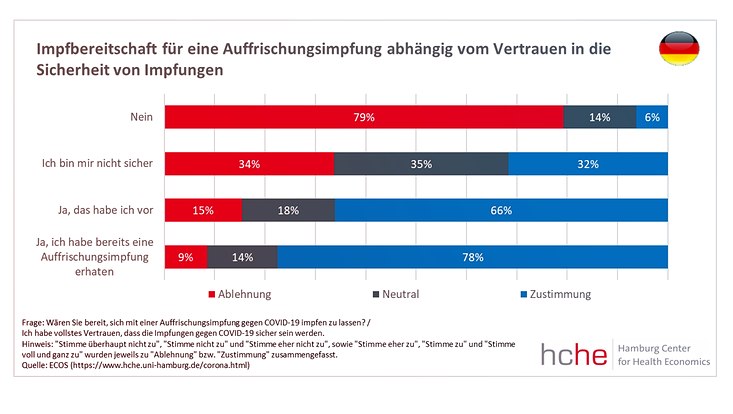
Foto: HCHE
Impfbereitschaft für eine Auffrischungsimpfung abhängig vom Vertrauen in die Sicherheit von Impfungen
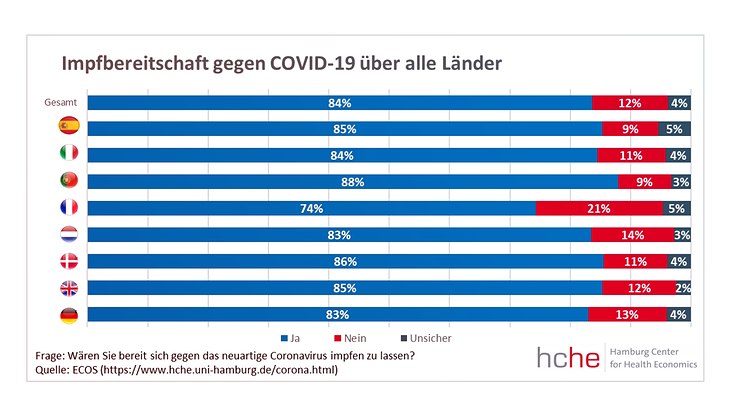
Foto: HCHE
Impfbereitschaft gegen COVID-19 über alle Länder
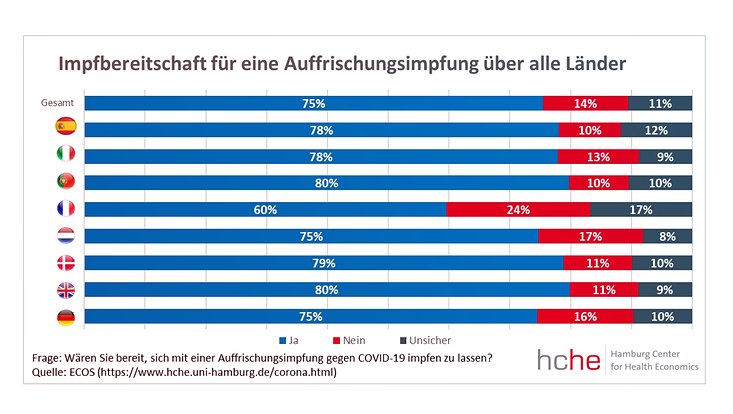
Foto: HCHE
Impfbereitschaft für eine Auffrischungsimpfung über alle Länder
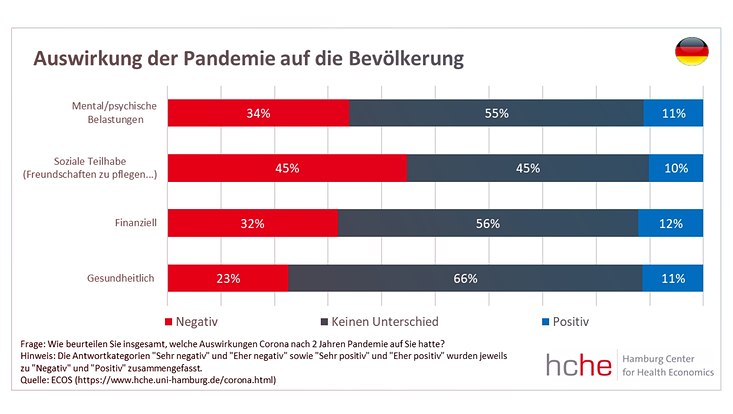
Foto: HCHE
Auswirkung der Pandemie auf die Bevölkerung
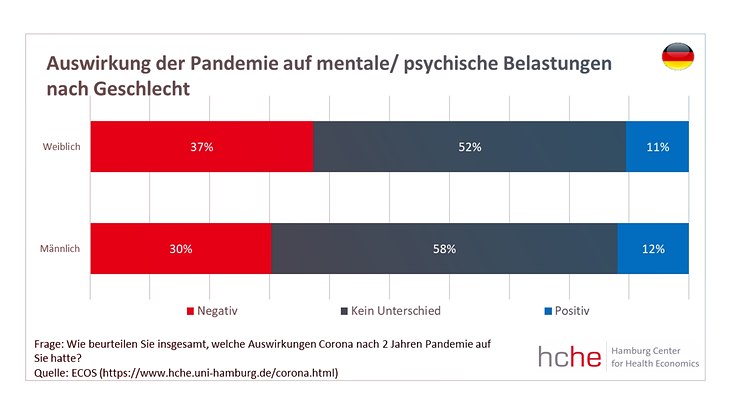
Foto: HCHE
Auswirkung der Pandemie auf mentale/ psychische Belastungen nach Geschlecht
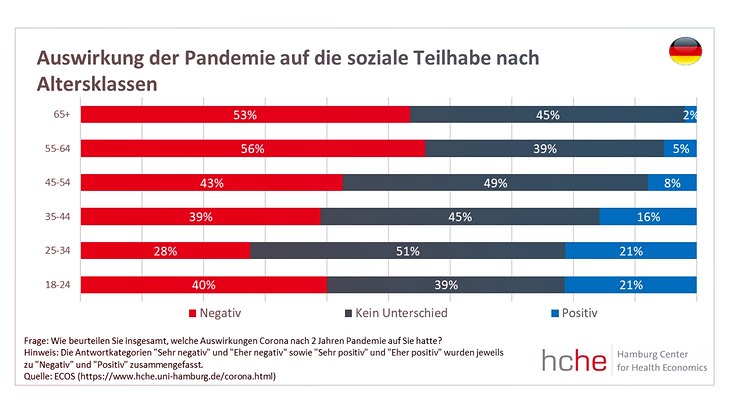
Foto: HCHE
Auswirkung der Pandemie auf die soziale Teilhabe nach Altersklassen
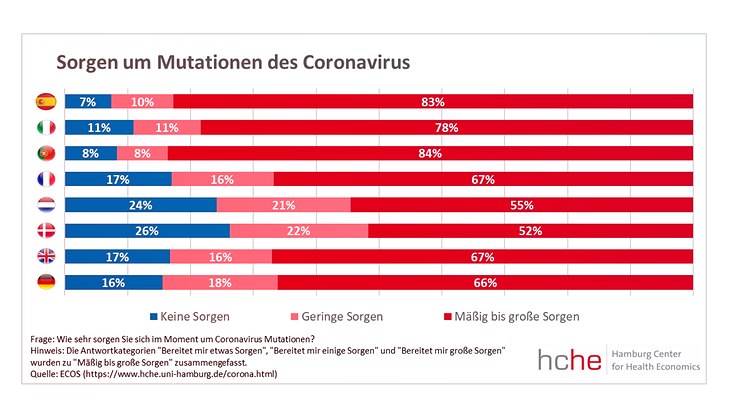
Foto: HCHE
Sorgen um Mutationen des Coronavirus